We are planting in Transylvania.
This is just two words for now. But it encompasses nearly five years of effort and longing. A longing to realize the idea and practice of 10 Million Trees not only within our national borders but everywhere we can have a direct connection with nature.
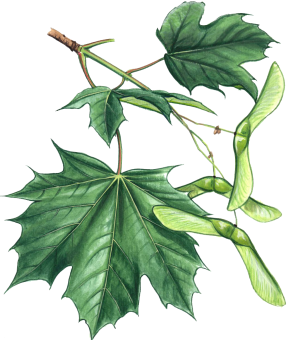
On the weekend of March 15, a dozen of us, 10 Million Tree supporters from Hungary, will finally hit the road and pilgrimage to Székelyföld, where we will plant about four thousand mixed forest saplings that we bring with us.
In November of last year, Dr. Réka Aszalós, a forest ecologist and expert on 10 Million Trees, and I traveled to Székelyföld.
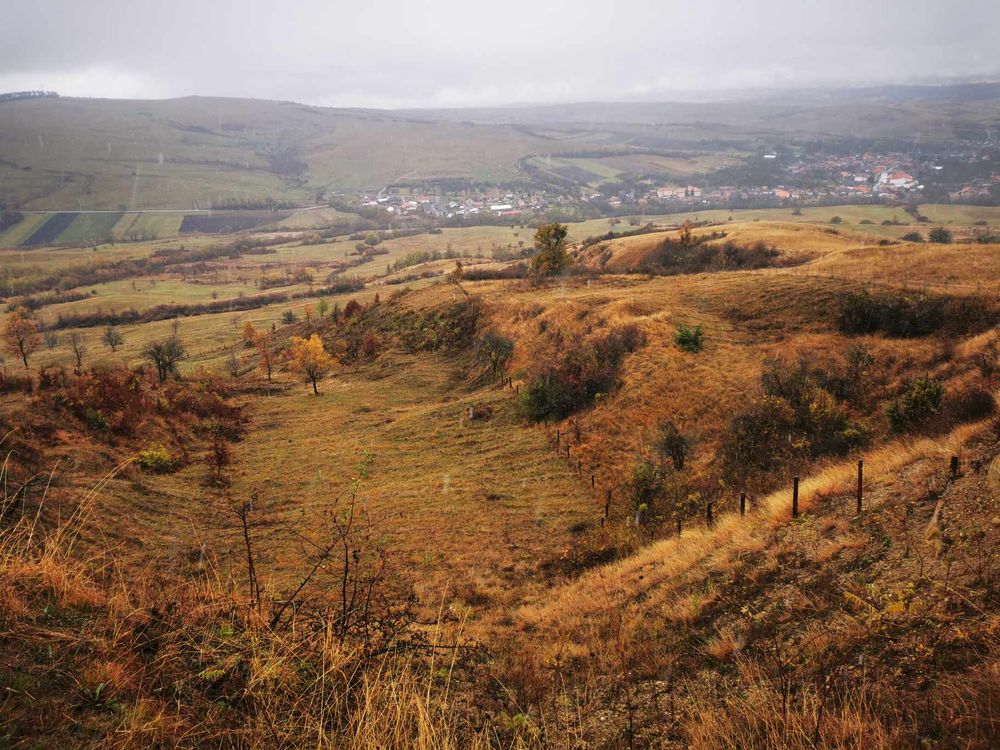
Traveling through wonderful landscapes and beautiful small villages, we finally found the location where, in collaboration with a local civil organization, the Land Art Association, we designated the planting site near Székelyderzs.
Hargita, and generally the Carpathian Mountains, as we have previously written, are in significant danger both historically and ecologically. And thus, Europe, which is now struggling with large contiguous, untouched forests, is also at risk.
Due to human folly and greed, those forests that existed just a few decades ago have been, in ugly jargon, logged away.
Not only are foreign companies to blame, which could never do such a thing in their own countries, but unfortunately, their local accomplices are also responsible, who prepared the environmentally destructive business for them.
We are planting in Transylvania.
This is just two words – as I wrote above, yet it signifies so much more.
Because we are planting, and we plan to realize our planting in Transylvania, all in honor of March 15, the revolutionary celebration of Hungarian civil development.
I do not forget the years of my youth when the evil tyranny of Ceausescu cast a dark shadow over the lives of Hungarians (and Romanians, Saxons, Gypsies, Jews) living there, and when it meant a lot to travel to Transylvania, bringing news from a relatively more open, freer world. Since then, the world has changed dramatically. On our way to Székelyderzs, we will pass through Segesvár.
Through that beautiful city, where, according to our best current knowledge, the perhaps greatest Hungarian poet fell at its border a year and a half after the revolutionary day, a bold, adventurous genius who was still almost a child by today’s standards, just 26 years old, with an incredibly rich and extensive body of work, the author of “The Sea Has Resurrected,” “Hang Them High, Kings!”, “Glorious Lords,” and perhaps the most important poem, “The National Song,” Sándor Petőfi.
We are planting for him now.
Our necessary bowing in honor of every sapling will be our tribute to Petőfi and his contemporaries who heroically fought for Hungarian freedom. To the Hungarian Academy of Sciences before the fermentation of the revolution, to the Chain Bridge, to the reform generation that brought about language renewal. Without them, the spirit of independence and the proud desire for justice against the oppressive, exploitative oppressors would not have taken root in the soul of the nation.
Thus, the thoughts of Homeland and Progress converge within us with the idea of preserving nature.
(Iván)
Would you join us? Let’s meet at the site: facebook.com/events/883094163567957