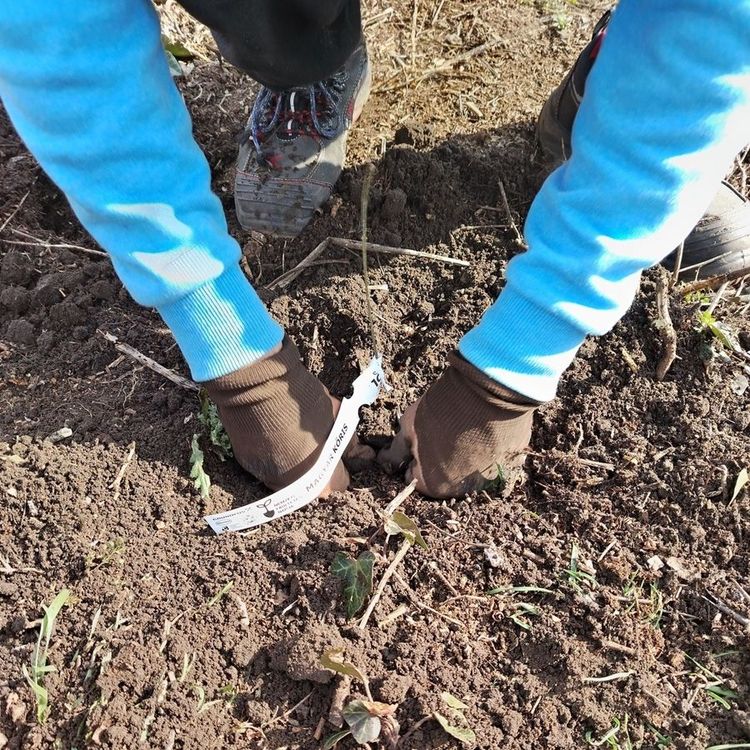
Here’s how to keep your planted sapling alive.
Planting a tree is like taming a fox for the little prince: once we have planted it, we are already responsible for it.
The foundation of life is water and air. If these two are present, then there is life in the soil.
If we have planted well, the minerals in the soil will also become available to our trees.
Based on this principle, we provide you with a few key points that are most important for successfully nurturing the trees (and shrubs) we have planted.
1. Keeping well and professionally planted trees alive is easier even during difficult periods of climate change.
If you are still at the stage of planting trees, be sure to familiarize yourself with our two resources, which will answer most of your questions and ensure proper planting!
Tree Planting Guide – download pdf
Download our Afforestation Guide – pdf
2. Water is essential.
This is especially true in the first 3-4 years after planting, when our trees primarily grow their roots (which is why you may not see significant growth in the first years for most species). Normally, there is enough precipitation during the growing season so that this is not a problem for the trees.
However, due to climate change, precipitation is becoming less frequent and more intense, leading to even worse infiltration than would be expected from the quantity alone.
Therefore, IRRIGATION is necessary! Yes, for at least 3, but preferably 4 years.
By then, the root system will penetrate deep and become extensive enough for the tree to better withstand droughts.
How should we water properly? You need to know when and how much to water.
When should you water?
It depends on drought conditions, so this year you need to start now, as almost half of the necessary precipitation has not fallen during the winter, making the soil already water-deficient. The sudden bursts of nature at this time require a lot of water, as the entire leaf mass needs to be regrown.
So, start watering every two weeks from now on, and then weekly from June (but if the end of May is around 30 degrees, then from the second half of May)! Continue this until mid-September.
You can skip watering only if at least 30 mm of precipitation has fallen since the last watering. Even then, only for one week. If it rains again, you can take a break. But if not, please water!
How much should you water? A lot… 1-2 buckets are not enough, as you need to saturate the soil at least 50-70 cm deep. One mm of rain saturates 1 m2 of (normal) soil to a depth of 1 centimeter. Therefore, 50-70 cm requires 50-70 liters.
If you water frequently but with small amounts, only the top 20-30 cm will be wet. The tree will be forced to develop its roots here. Since the surface of the soil dries out first, the trees will become more drought-sensitive later and are likely to dry out.
3. Cover the surface! Mulch and use shrubs across the entire surface area of the tree’s crown!
By doing this, you simultaneously help prevent the need to struggle with herbaceous plants (the “weeds”), while the cover supports the development of soil life, and the covered soil can retain water better, making it more drought-resistant.
Moreover, an aesthetically pleasing edible fruiting shrub or herb is both beautiful and beneficial for you and the animals.
4. If you notice that your tree is sick and its leaves are changing color, look for help online or consult a professional.
If the tips or edges of your tree’s leaves are drying out, it is likely suffering from a lack of water, so water it more.
If the leaves are discoloring in various ways, search for a photo online to find out which nutrient your tree is lacking. You can replenish this, as you will find good products in agricultural stores.
After this, you will likely have nothing else to do but admire how your tree is growing. Be patient, as this is not a sprint but rather an extreme long-distance run. But it is worth it!
Did you know that a tree cools its surroundings with the power of five 7 kW heat pumps?
And this is just one of its many good qualities. If you take care of your tree, it will protect you too!
The author of the article Balázs Bozzay, forestry expert of the 10 Million Trees initiative