Get to Know Us! Part 3
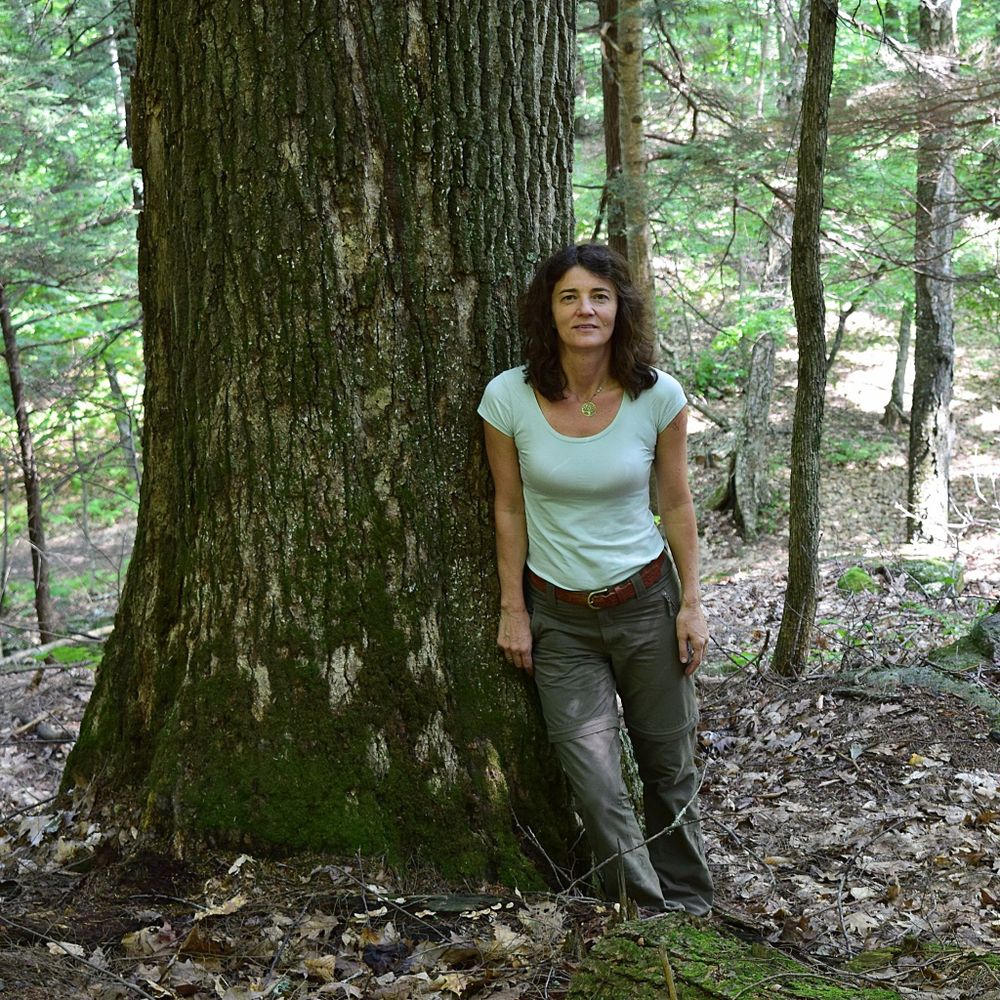
A community ecologist for the 10 Million Trees initiative and a staff member of the Ecological Research Center. One of her main areas of interest is the research of untouched, primary forest-like stands. A trained yoga instructor, mother of two, and an enthusiastic resident of Buda. She often attends the plantings and events of 10 Million Trees with her family, along with her indispensable Tesla, an energetic spaniel.
– You recently returned from Rwanda and Australia. Is the life of a forest ecologist this exciting?
Partly due to Covid, there were no conferences for two years, so now our schedule has suddenly become much busier.
In Rwanda, we attended a conservation conference (ICCB 2023) where we learned about numerous African issues and potential solutions, covering topics such as the protection of lions and other large game with local involvement. We also had the opportunity to meet representatives from the Dian Fossey Foundation. Dian Fossey, the American-born ethologist, is famously known for her determined efforts and fearless dedication to protecting mountain gorillas in Rwanda, and it is thanks to her that this wonderful species has been saved from extinction. The foundation has a large following in the country, with a strong emphasis on having many women among its staff.
In Australia, we participated in the tenth World Congress on Ecological Restoration this September, where we also learned a great deal.
This kind of thinking and its implementation there is racing ahead at Ferrari speed, while in Hungary, this knowledge is still in its infancy, and only a few people understand what ecological restoration truly means. In Hungarian, we mostly translate it as habitat restoration, referring to the assistance in restoring a degraded or destroyed habitat.
– When you’re not attending conferences, what does the life of a forest ecologist look like?
Mine stands on multiple legs: managing a LIFE project that started in 2017 and will last for ten years (LIFE 4 Oak Forest project) is my main task, within which we are developing conservation forest management methods in oak forests in collaboration with several national parks – including Bükki, Balaton-felvidéki, and Duna-Ipoly National Park Directorates – as well as with WWF Hungary, the Érmellék Nature Conservation Multi-Purpose Association, and the Italian Ente di gestione per i Parchi e la Biodiversità-Romagna conservation organization.
Conservation forest management differs from economic forest management in that its goal is not to achieve economic profit but to preserve and restore natural forest habitats.
During the management processes, we strive to create forests with diverse structures and species compositions that provide habitats for forest flora, fauna, and fungi, thereby increasing biodiversity and allowing for the development of a healthy ecosystem overall.
Conservation interventions also include the removal of invasive plants, for which we plant mixed species. In such interventions, the creation of various forms of deadwood is of central importance, which is one of my pet projects, as about half of forest organisms are linked to deadwood at some stage of their life cycle.
We can say that the more diverse and varied the relationships present in the forest, the more they strengthen the “immune system” and stability of ecosystems, meaning that the forest is more resilient to the increasingly intensifying environmental changes. Such a project involves a lot of administration and management, so it takes up a significant portion of my time.
The second aspect I would mention is scientific writing, which is ongoing and is key to a researcher’s success. Additionally, building a network is important, both through international conferences and grants, as well as with domestic foresters, conservationists, and ecologists.
– And what is your role in the 10 Million Trees project?
Over the past four years, my main task has been to represent ecological knowledge, which we have tried to channel into the 10 Million Trees project alongside other experts. Of course, this should not be imagined as a Holy Grail that can be instantly handed over, or that there are ready-made answers, but rather as a continuous process of shared learning.
From the very first meeting with the other two expert colleagues (forestry technician Balázs Bozzay and horticulturist Balázs Zsolnay), we found common ground. Without having known each other before, the three of us sat down together and said, “Alright, let’s start with the basics – what kind of tree are we planting, where are we planting it, how are we planting it, and when are we planting it?”
I obviously represented the ecological aspects of this, while the other two colleagues brought in their own perspectives, which resonated very well, and this formed the basis of our first professional material. It was a very strong starting point, and I felt that we were knocking on open doors; there was no need to convince anyone why this was important.
Later on, the importance of ecological restoration also became evident, and we are applying it in more and more of our projects, primarily on a “learning by doing” basis, since there is very little forest restoration activity taking place in Hungary: while there is invasive species removal and tree planting in national parks, there are few projects that meet most of the criteria for habitat restoration.
For example, one important criterion is that such activities should involve the local population. Our Nyimi and Dombfalva plantings are excellent examples of this. In Dombfalva, it developed very interestingly how the will of the local owner intertwined with a permaculture mindset and the principles of ecological restoration.
The EU wants to support complex restoration activities at a very high level and establish a strong knowledge base. I would like to achieve that by riding this wave, we carry out complex landscape rehabilitation projects that restore forests, grasslands, and wetlands.
– Can we talk about restoration nowadays, or should we be planting completely different species due to climate change?
There is a lot of debate about this, with various theories in circulation. We still do not know what will happen, but we do know that there are several tools available to strengthen the stability of forests. What we regularly apply in the 10 Million Trees project is enhancing habitat resistance and resilience, which we support in two ways: by planting a variety of tree and shrub species, and by setting a high ratio of drought-resistant species.
There was an article featuring you in Glamour, and in 2021 you received the most public votes and became the Marie Claire Go Green ambassador. I have two related questions: do you think women are more sensitive to the topics of climate change and environmental protection?
Also, what does an average reader “take away” from an interview with a forest ecologist, what is the key message?
The message we use greatly depends on what the particular community is sensitive to. When it comes to the future of our children, this is definitely something that can resonate strongly with mothers.
As for the second question: I have given many interviews, and I always try to tailor my message to whom I am speaking to.
There are times when I specifically talk about my work as a forest ecologist, and during those moments, I primarily want to emphasize how infinitely complex a forest is, so that afterward, people look at a forest differently.
An important message is that the trees in a forest are not independent entities; they form a community; there is strong communication among the trees in the forest facilitated by mycorrhizal fungi in the soil. If we destroy this and replace it with, say, a plantation, that is completely different from a real, natural forest.
I have also had many interviews—especially after major disasters, extensive wildfires—when everyone asked the question, “Okay, but what can I personally do against climate change?” At that point, I no longer speak as a forest ecologist but as someone who has thought a lot about how to reduce their footprint, how to be a responsible citizen, and what can be done to create change.
Basically, I usually suggest that people be conscious and look at what they can change in their various areas of life—finances, diet, travel, clothing, waste management, etc.—and change what they can.
Examples include choosing a responsible community bank, reducing meat consumption, cutting down on dairy products, preferring organic foods, buying second-hand clothes, using a bicycle or public transport, practicing selective waste collection, shopping at zero-waste stores, etc.
At the same time, I would not recommend that we go down a path of eco-asceticism. Individual responsibility is important, but it pales in comparison to the responsibilities of politicians and large corporations, so I believe one of the most important tasks for individuals is to participate in shaping the opinions of decision-makers.
Read the other parts of our Get to Know Us! series:
Franciska Hervai – Chief Coordinator
Dénes, the problem-solver!